
Plan
Chongqing Travel Guide for First-Time Visitors
The starting point for planning a trip to Chongqing: how long to stay, where to base yourself, how to move around, and the one thing about this city that changes every other decision.
Three days in the centre, based in Jiefangbei, is the plan that works for most first visits.
- Two days is the minimum where the trip stops feeling rushed. Three is comfortable. Four if you want a day trip.
- Base yourself in Jiefangbei for a first visit: it puts the river, the old city and the night views within walking distance.
- Chongqing's terrain, not its distances, decides your itinerary. Two places 400 m apart can be eight flights of stairs apart.
- Metro is reliable and cheap. Taxis are cheap too, and worth it whenever a route involves a hill or a stair descent.
- Come with a payment app set up before you arrive. Cash works, but very little else about daily life assumes it.
This page is the overview. The practical detail lives in the sections below and in the individual guides.
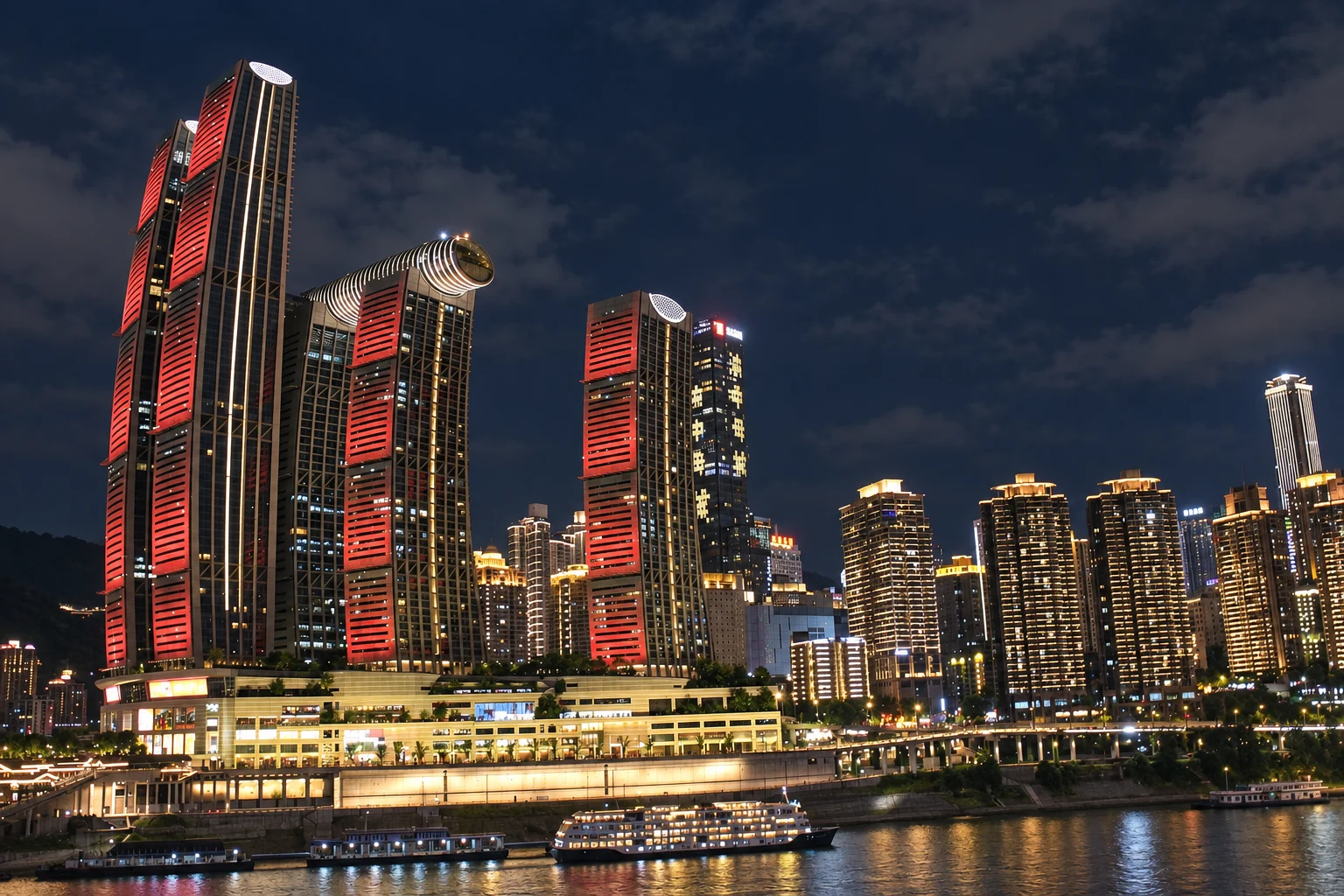
Is Chongqing worth visiting?
Yes, and for a specific reason rather than a general one. Most Chinese cities have a temple district, a shopping street and a museum. Chongqing has something no other large city has: a working urban landscape built on cliffs, ridges and two rivers, where the street you want is sometimes five storeys above the one you are on.
That makes it unusually good for anyone who likes cities as objects — photographers, walkers, people who enjoy getting slightly lost — and slightly harder work for anyone who wants a destination that presents itself neatly.
The night skyline is real and it is genuinely spectacular. So is the food. But if you come only for the lights and a hotpot, you will have a good time and miss the reason people who have been here talk about it for years.
How many days do you need?
Our recommendation by trip shape, all assuming you are not arriving at midnight and leaving at dawn.
Guidance, not a rule. Our planner will build a specific version from your own inputs.
Ready-made itineraries
Each one is a real sequence, not a list. Stops are ordered so you move downhill where possible and stay in one area at a time.
1 day · balanced pace
1 Day in Chongqing
One day, one peninsula, no wasted transfers. Everything here is inside the Yuzhong core so you spend the day walking the city rather than crossing it.
- Walking
- 6-8 km, with a lot of it vertical
- Day trip
- Not included
Best for: A layover or a single spare day where you want the essential Chongqing and nothing else
Open the plan2 days · balanced pace
2 Days in Chongqing
The shortest trip that does not feel rushed. Day one covers the peninsula on foot; day two uses the river crossings and the south bank to show a different face of the city.
- Walking
- 7-9 km per day
- Day trip
- Not included
Best for: A long weekend or a stop between two Chinese cities
Open the plan3 days · balanced pace
3 Days in Chongqing
An arrival afternoon and two full sightseeing days from a Jiefangbei base: the central peninsula, the south bank, then Liziba and the western neighbourhoods. Suggested times leave space for meals and transfers; choose fewer stops if you also depart on day three.
- Walking
- 6-9 km per day
- Day trip
- Not included
Best for: First-time visitors with an arrival afternoon, two full days and time for stairs
Open the plan4 days · balanced pace
4 Days in Chongqing
Three days in the city plus one day out of it. This is the first length where a day trip stops being a squeeze and starts being worth it.
- Walking
- 6-10 km on city days, less on the day trip
- Day trip
- Included
Best for: Travellers who want the city properly and one substantial day out
Open the plan5 days · relaxed pace
5 Days in Chongqing
Enough time to stop rushing, take one full day trip and still have a day left for the parts of the city most visitors skip entirely.
- Walking
- 5-9 km per day, deliberately unhurried
- Day trip
- Included
Best for: Travellers who would rather see eight things properly than fifteen badly
Open the plan
Where to base yourself
For a first visit, Jiefangbei is usually right. Not because it is the nicest area — it is the loudest and the most expensive — but because it puts the old city, the rivers and the evening viewpoints within walking distance, which on a short trip matters more than anything else.
Guanyinqiao on the north bank is flatter, cheaper and more local, at the cost of crossing the river for almost everything you came to see. Nanbin Road gives you the skyline opposite you at the price of a transfer for every sight. Near Ciqikou you get old-town atmosphere and a long ride into the centre.
Our stay finder scores every area against your own priorities rather than telling everyone the same thing.
Compare the areas
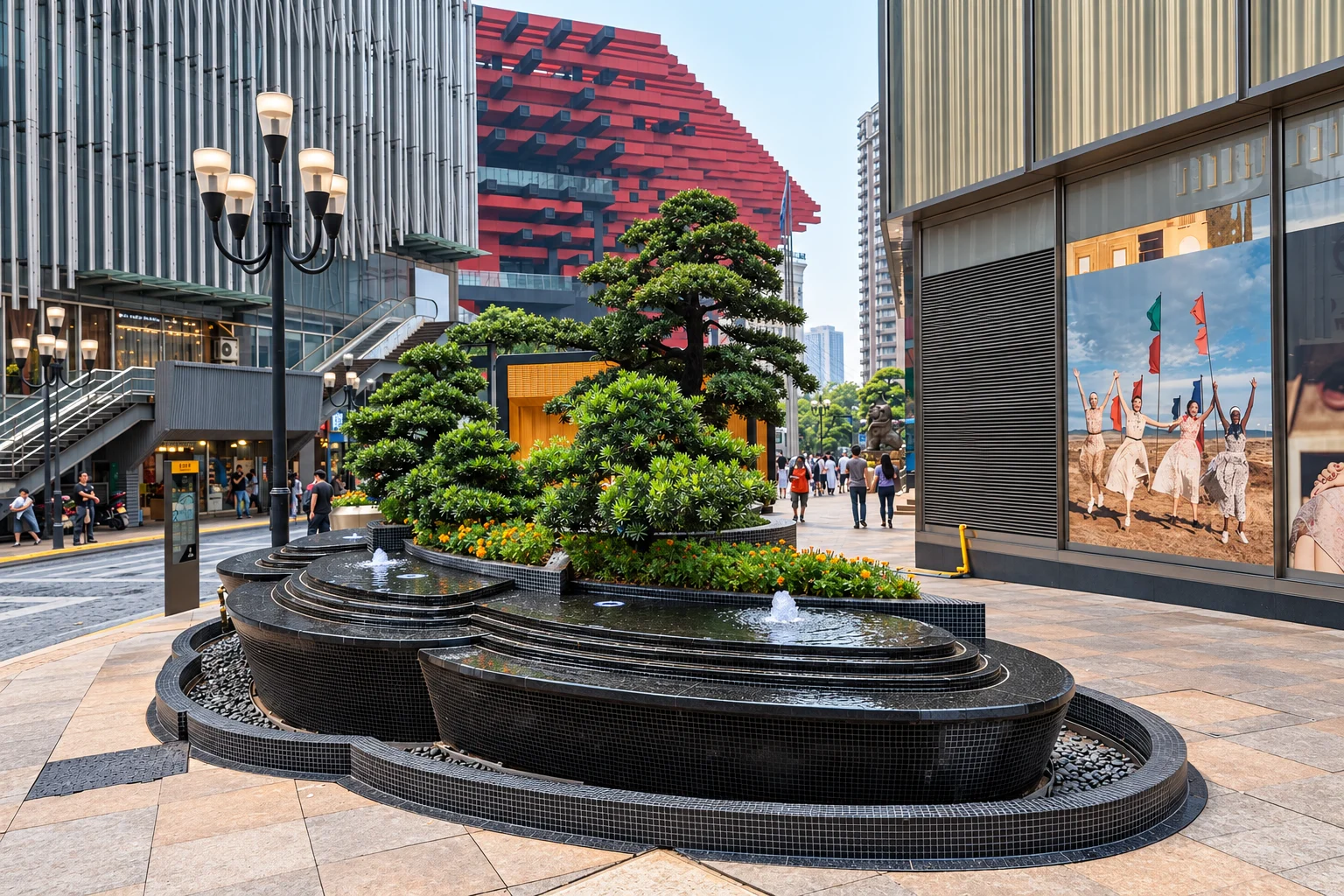
Where to stay
Jiefangbei
解放碑
A practical base for a first two- or three-night visit: central sights and restaurants are in the same district. Choose the entrance as carefully as the map pin; the pedestrian core and the river are at different levels.
- Sights
- Excellent(5/5)
- Food
- Excellent(5/5)
- Metro
- Excellent(5/5)
- Walking
- Fair(3/5)
Good for 2-4 nights
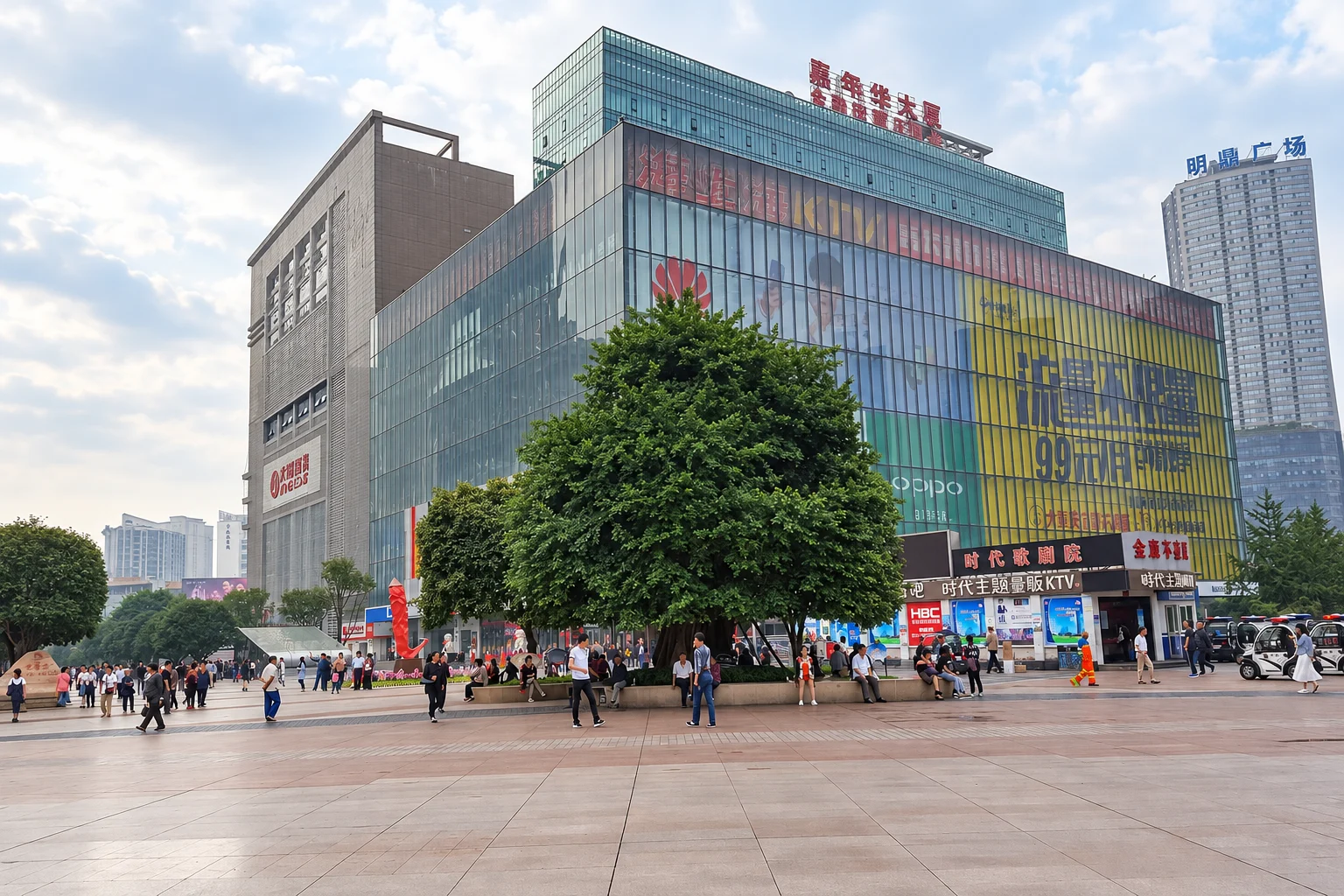
Where to stay
Guanyinqiao
观音桥
The commercial centre of the north bank. Busier with residents than with visitors, and noticeably flatter than the south-bank core.
- Sights
- Limited(2/5)
- Food
- Strong(4/5)
- Metro
- Strong(4/5)
- Walking
- Strong(4/5)
Good for 2-3 nights
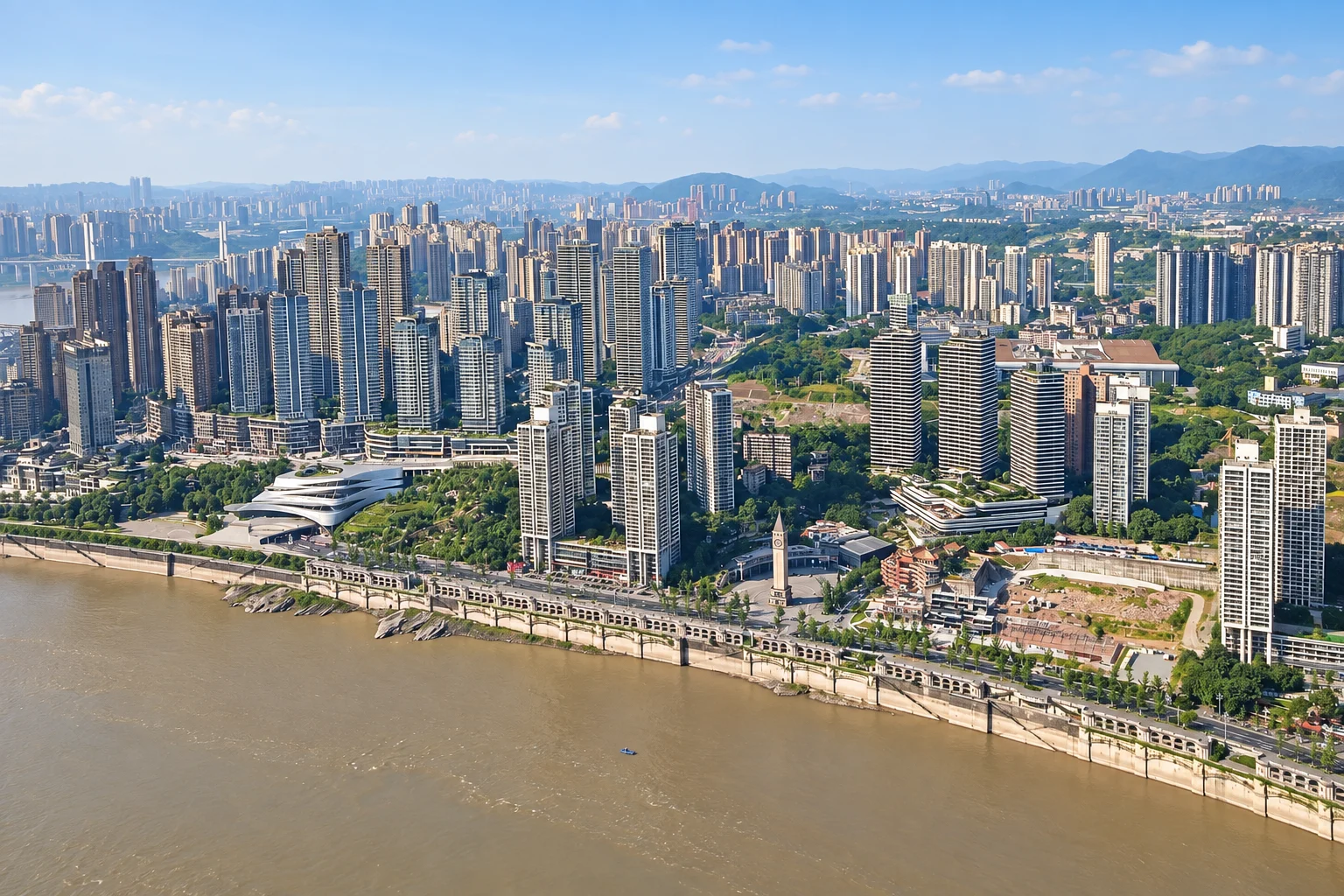
Where to stay
Nanbin Road
南滨路
The south-bank riverside promenade, looking straight back at the skyline. The obvious base if the photographs are the point of the trip.
- Sights
- Fair(3/5)
- Food
- Strong(4/5)
- Metro
- Fair(3/5)
- Walking
- Strong(4/5)
Good for 2-3 nights
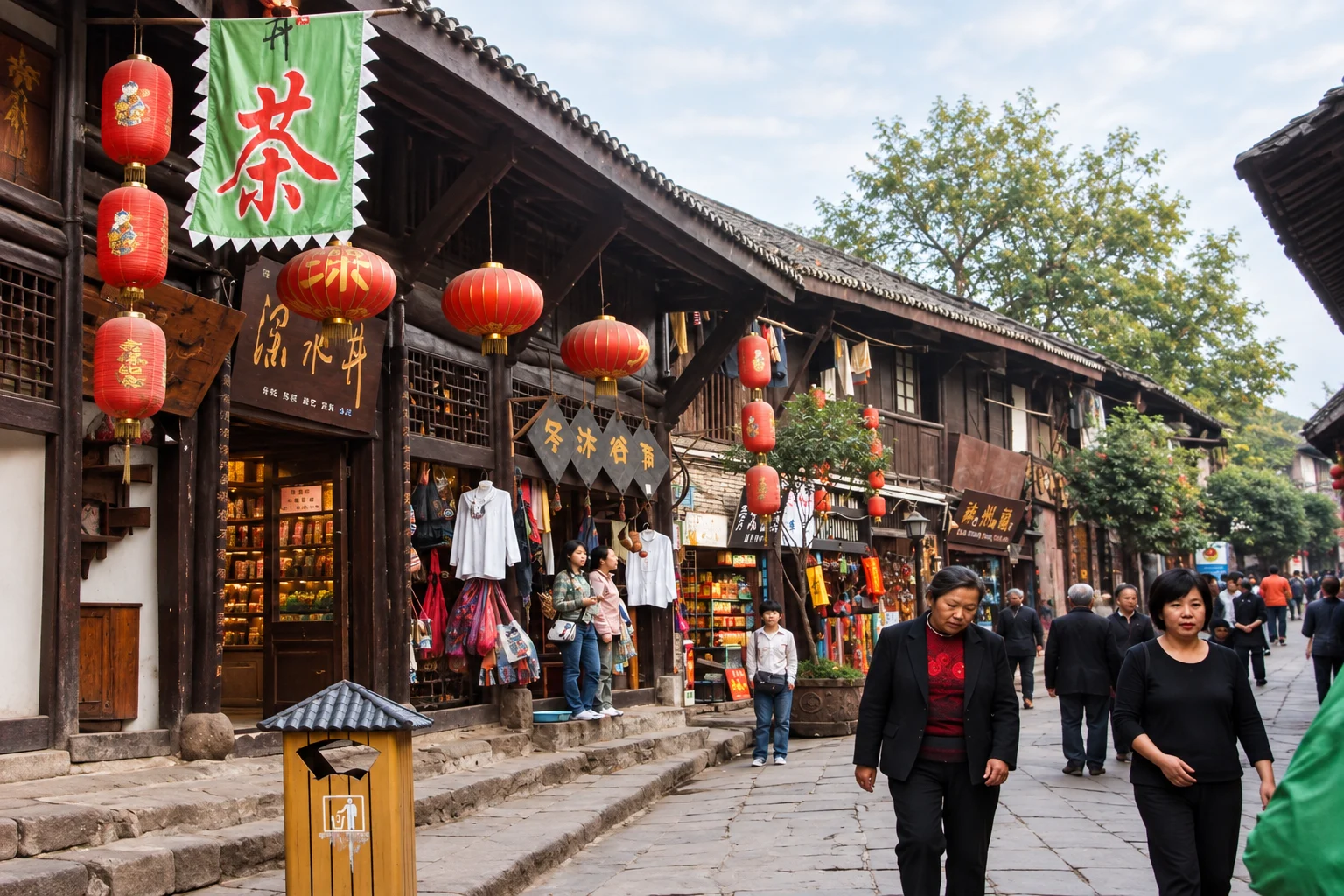
Where to stay
Shapingba & Ciqikou
沙坪坝 · 磁器口
West of the centre, anchored by the old streets of Ciqikou and a large university district. Slower, cheaper, and a different version of Chongqing.
- Sights
- Fair(3/5)
- Food
- Fair(3/5)
- Metro
- Strong(4/5)
- Walking
- Strong(4/5)
Good for 2 nights
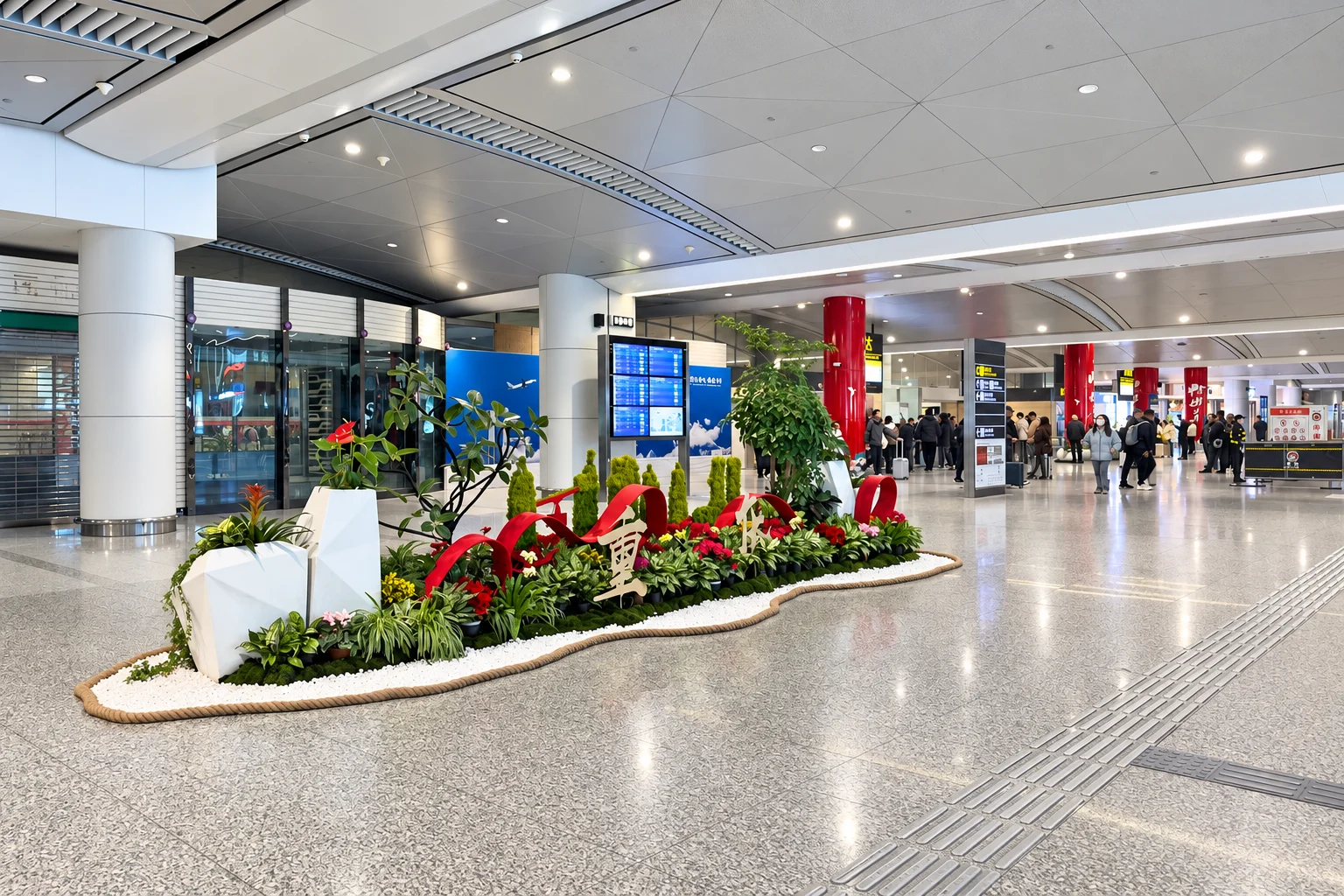
Where to stay
Airport Area
江北机场片区
For layovers, pre-dawn departures and transit stopovers. Functionally useful, but not somewhere to base a holiday.
- Sights
- Poor(1/5)
- Food
- Limited(2/5)
- Metro
- Strong(4/5)
- Walking
- Excellent(5/5)
Good for 1 night
Build your own plan
Give the planner your dates, pace, interests and mobility, and it will sequence a trip from our curated data — including warnings where the walking load gets high.
Interactive tool
Itinerary Planner
Build a realistic day-by-day plan from your trip length, pace, interests and hotel area.
Getting around
The metro is clean, cheap and frequent, and the signage in English is good. It is also built into the terrain, which means some stations are deep, some exits involve a long escalator, and the distance between two exits can be several hundred metres.
A taxi can help with hills or luggage. Show your destination's Chinese name and exact address to reduce confusion, and confirm the fare or metered service.
The Yangtze cableway is a genuine form of transport that happens to be a sight. The monorail is the same.
The places to start with
If you see only these, you will have understood the city.
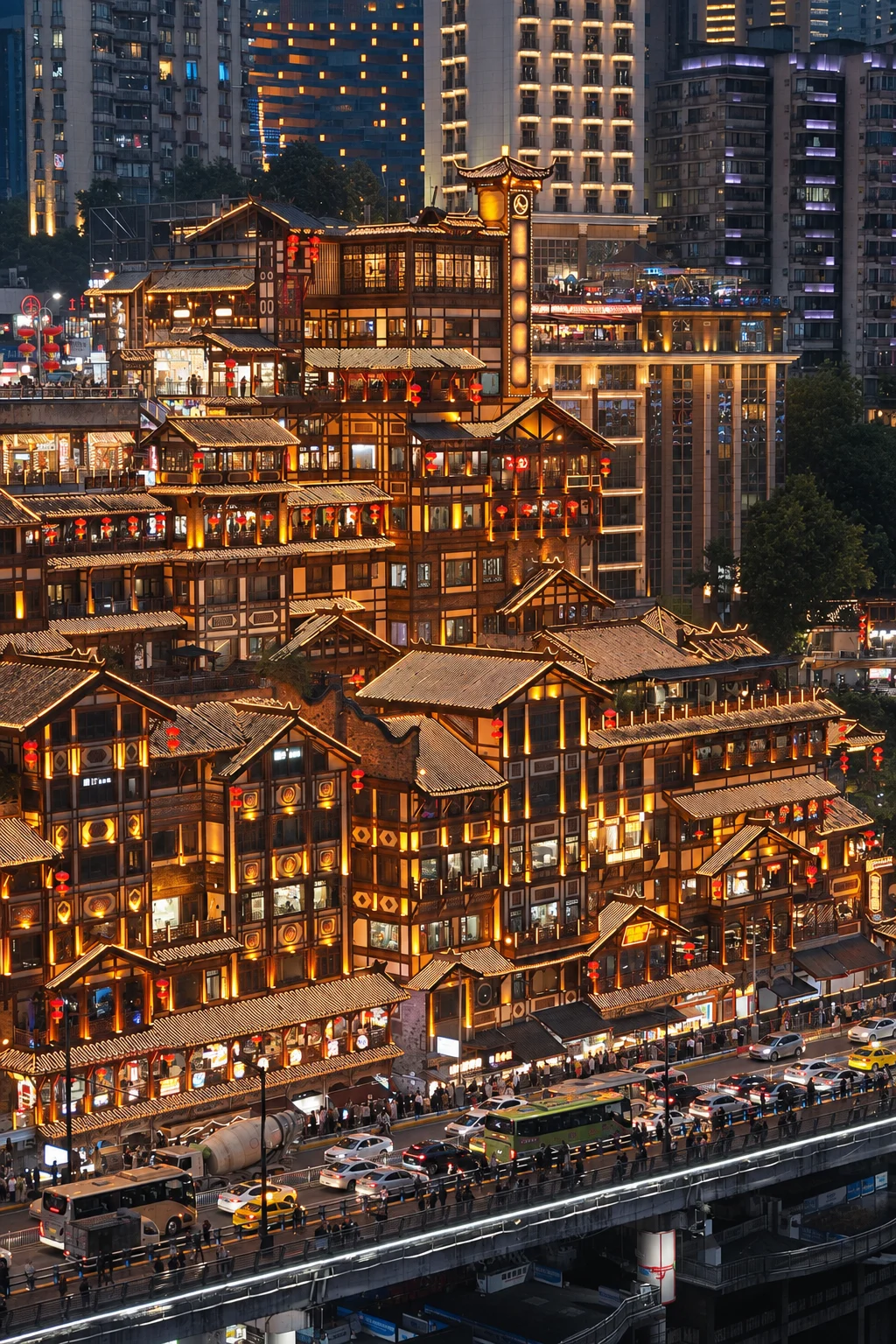
Hongya Cave is a cliffside dining and shopping complex beside the Jialing River. Its upper entrance is on Cangbai Road; the riverside is a different level. Plan the approach and outside view before joining the crowd.
- Best time
- Sunset, Evening
- Allow
- 1 hr 30 min
HardMany stairsConfirm practical details
The bridge across the Jialing River between Hongya Cave and Jiangbeizui, with views back toward the cliffside buildings. Check pedestrian access during busy periods.
- Best time
- Sunset, Evening
- Allow
- 45 min
EasyConfirm practical details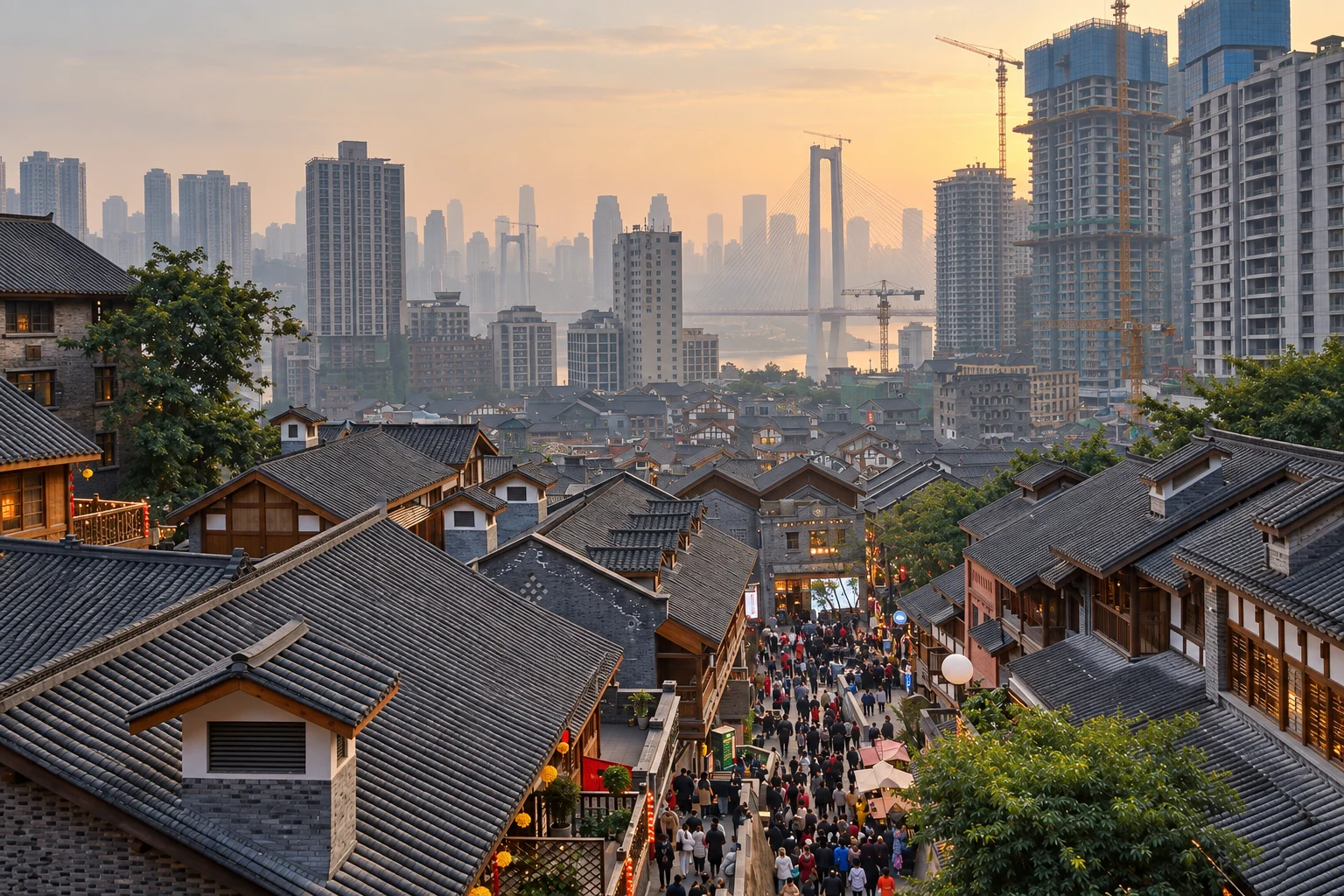
A restored hillside quarter of stepped lanes connecting the upper city to the lower town, rebuilt around the remains of an older neighbourhood.
- Best time
- Morning, Afternoon
- Allow
- 1 hr 30 min
HardMany stairsConfirm practical details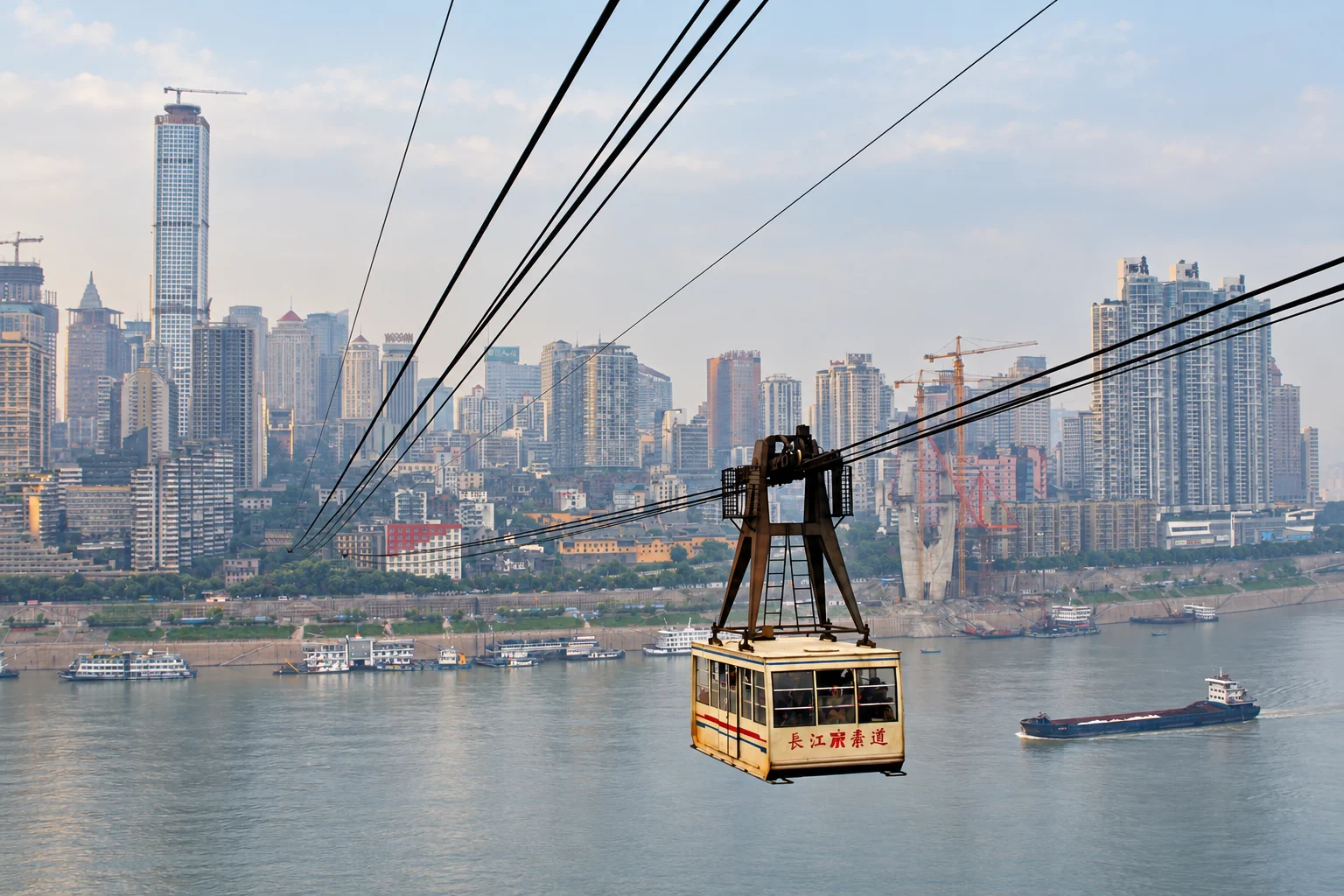
A cable car across the Yangtze that was built as commuter infrastructure and is now mostly a sightseeing ride, with the city opening up beneath you.
- Best time
- Afternoon, Sunset
- Allow
- 2 hr
EasyConfirm practical detailsThe point where the Jialing meets the Yangtze, marked by a curved tower complex whose skybridge looks down on the confluence.
- Best time
- Afternoon, Sunset
- Allow
- 2 hr
ModerateConfirm practical details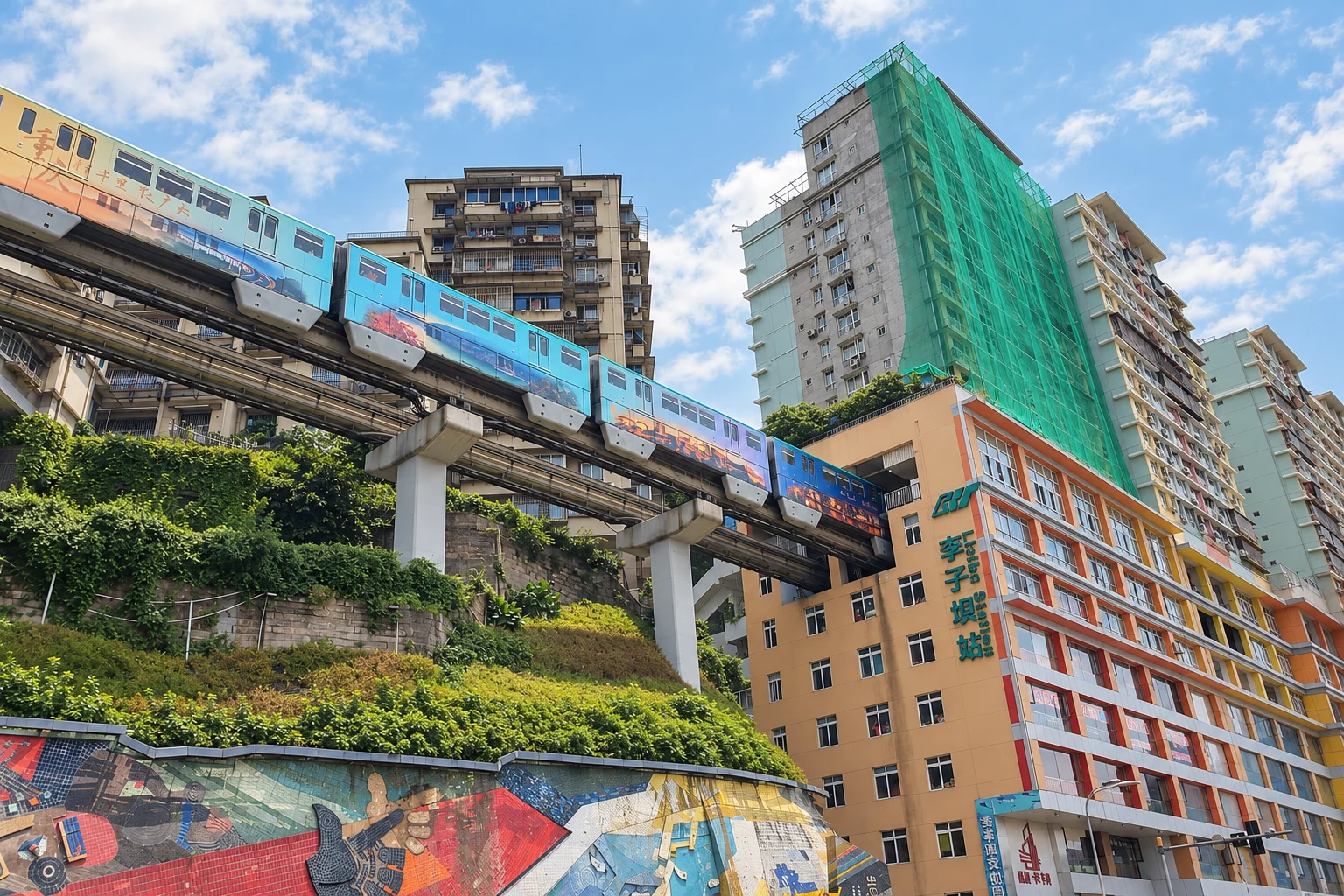
The point where the monorail runs straight through the middle of a residential block, with a viewing platform built to watch it.
- Best time
- Morning, Afternoon
- Allow
- 1 hr
ModerateConfirm practical details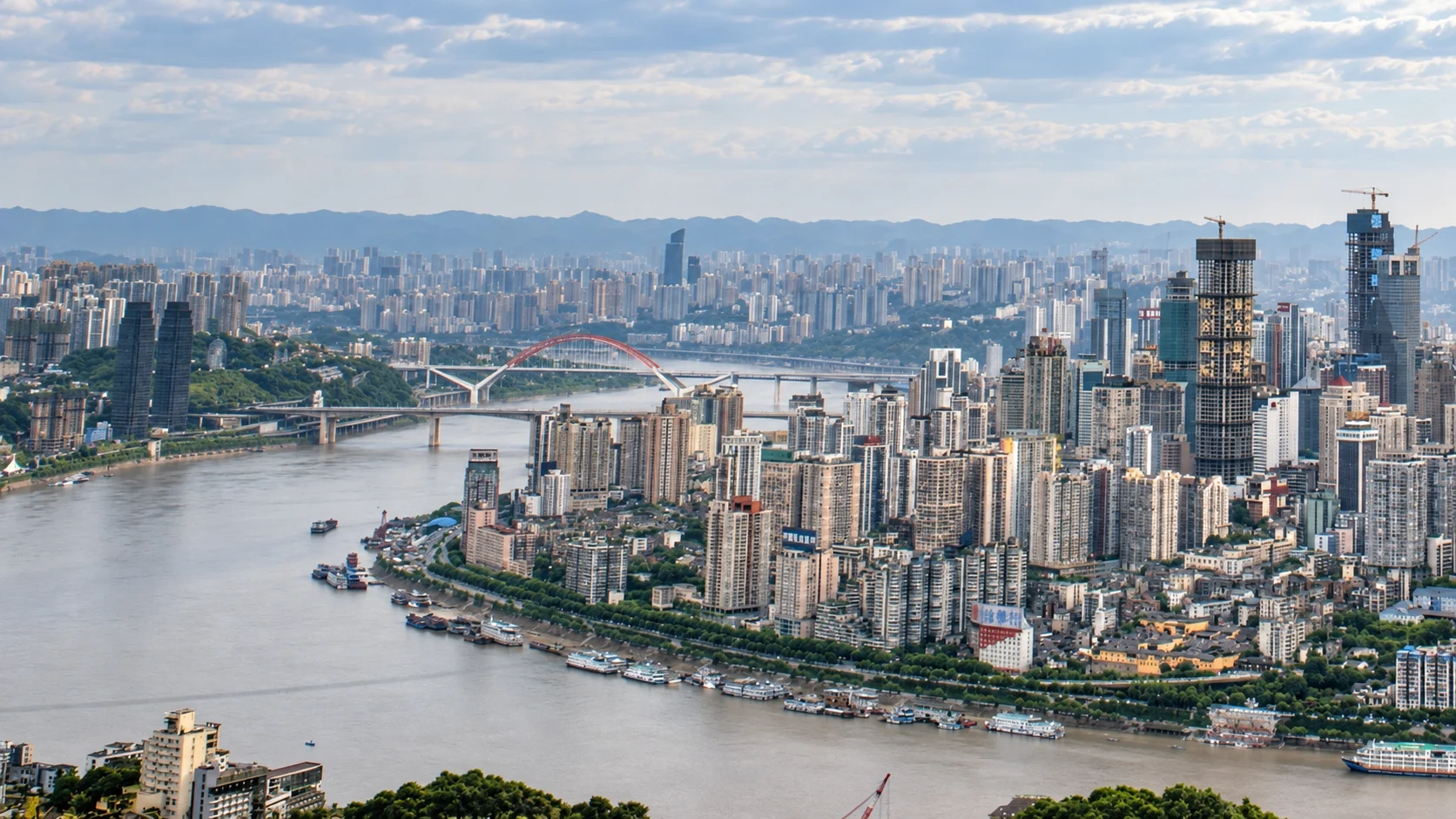
A purpose-built observation terrace high on Nanshan, looking north over the whole peninsula and the river confluence.
- Best time
- Sunset, Evening
- Allow
- 1 hr 30 min
EasyConfirm practical detailsA preserved riverside trading town on the west side of the city, now given over almost entirely to narrow shopping lanes and food stalls.
- Best time
- Morning, Afternoon
- Allow
- 3 hr
ModerateConfirm practical details
Practicalities worth sorting before you fly
Set up your payment app and any required card or identity checks before arrival. Keep a backup payment method and some RMB for occasions when a phone payment does not work.
Choose a data option that works with your phone and travel needs. Check coverage, activation and access to the services you plan to use.
Check your entry requirements with the official guidance and confirm travel-document requirements with your airline before departure. Use our transit checklist as a starting point.
Related guides
Plan
How Many Days Do You Need in Chongqing?
An honest answer by trip shape, including the case for staying shorter than most guides suggest and the case for staying longer than you planned.
View guideConfirm practical detailsPlan
Best Time to Visit Chongqing
The city is a genuine year-round destination, but the seasons change what you can do rather than merely how comfortable you are. Here is how each one behaves.
View guideConfirm practical detailsTravel Essentials
Chongqing Terrain and Walking
Plan Chongqing by street level and hotel entrance. Use walking labels to compare effort, then confirm the complete route if stairs or lifts determine access.
View guideConfirm practical detailsTravel Essentials
Payments in Chongqing for International Visitors
Alipay and WeChat Pay run almost everything here. How to get them working before you arrive, what still takes cash, and the failure modes that leave people stuck at a till.
View guideConfirm practical details
Before you go
Check current opening, booking and access arrangements with the venue before your visit.