
Explore
Chongqing for Photographers
Where the light works, where the crowds do not, and why this city rewards planning more than most — including the composition notes that actually matter here.
Shoot the city's layers, not its landmarks. Chongqing's photographs come from compression and elevation, not from individual buildings.
- The classic shots need elevation: a bridge deck, a terrace, a viewing platform.
- Mid-morning and late afternoon give direction to the light; noon flattens everything and the haze is at its worst.
- The day after rain is the best light this city offers.
- Night photography here is about the blue hour, not full darkness. The window is short.
No composition is worth standing in a traffic lane for. Several of the obvious angles are on active roads.
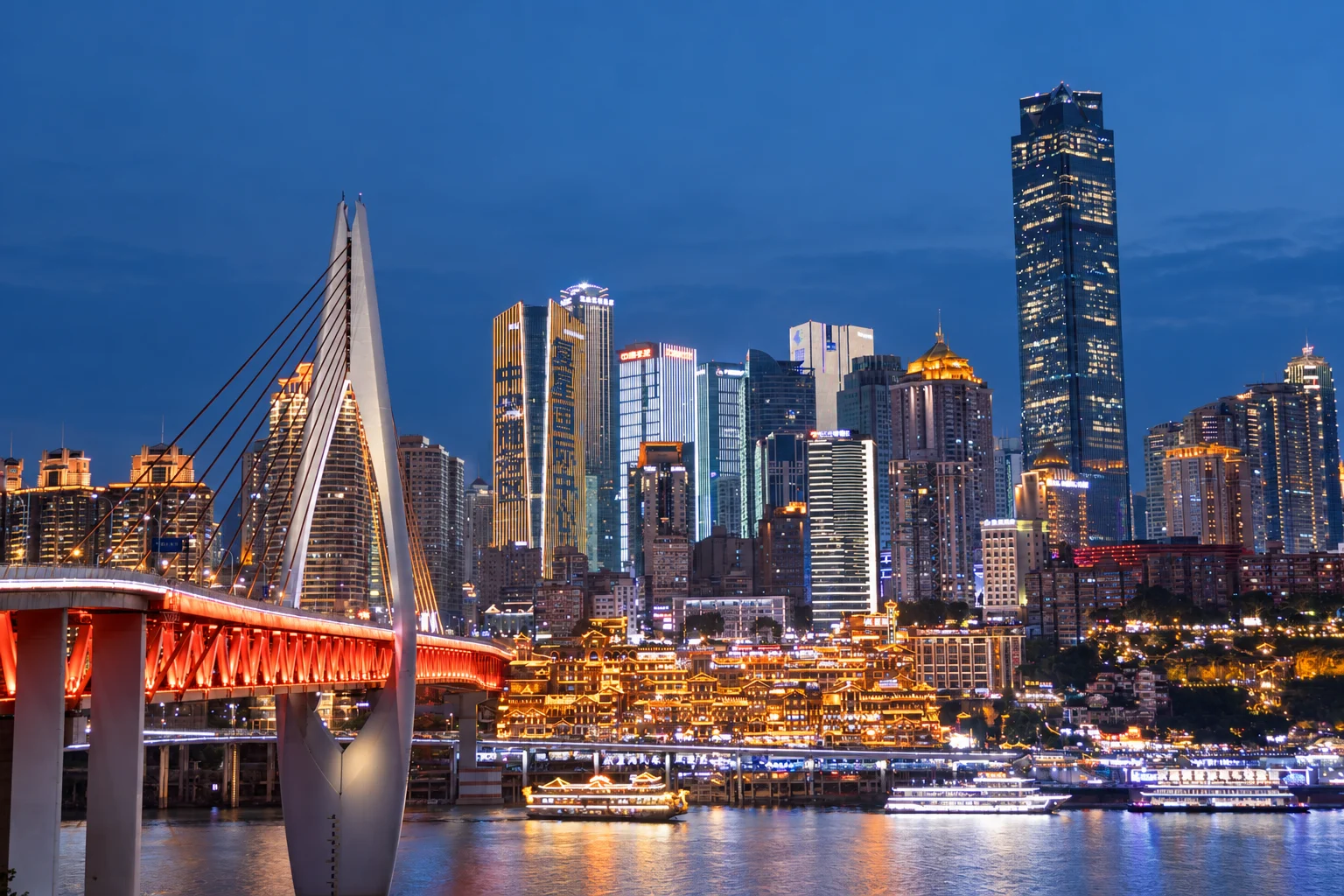
What makes this city photograph well
Chongqing compresses. Bridges, towers, monorails and stairways stack into the same frame, and that stacking is the image people recognise. It is a city that photographs best in telephoto and from above.
The other thing it does is contrast. Old stair neighbourhoods sit under new towers; a monorail runs through a residential block; a temple facade faces a shopping mall. Those juxtapositions are the reliable subject matter here.
Composition notes
Shoot down and across
Elevation is everything. A bridge deck, a terrace, a viewing platform or a hillside street will beat any street-level composition in this city.
Use compression deliberately
A longer focal length stacks the city's layers into a flat, dense image, which is the look that reads as Chongqing rather than as any other Chinese city.
Include the water
The rivers are what give the skyline its scale and its reflections. A skyline shot with no water in it loses most of its context.
Wait for a train
The monorail entering or leaving the building at Liziba is the moment the photograph happens. Trains run frequently; the wait is short.
Look for the stairs
Stairways with people on them, lit from above, are the most distinctive local composition and the least photographed.
Where to shoot, by time of day
The locations with the most value per minute
The bridge across the Jialing River between Hongya Cave and Jiangbeizui, with views back toward the cliffside buildings. Check pedestrian access during busy periods.
- Best time
- Sunset, Evening
- Allow
- 45 min
EasyConfirm practical details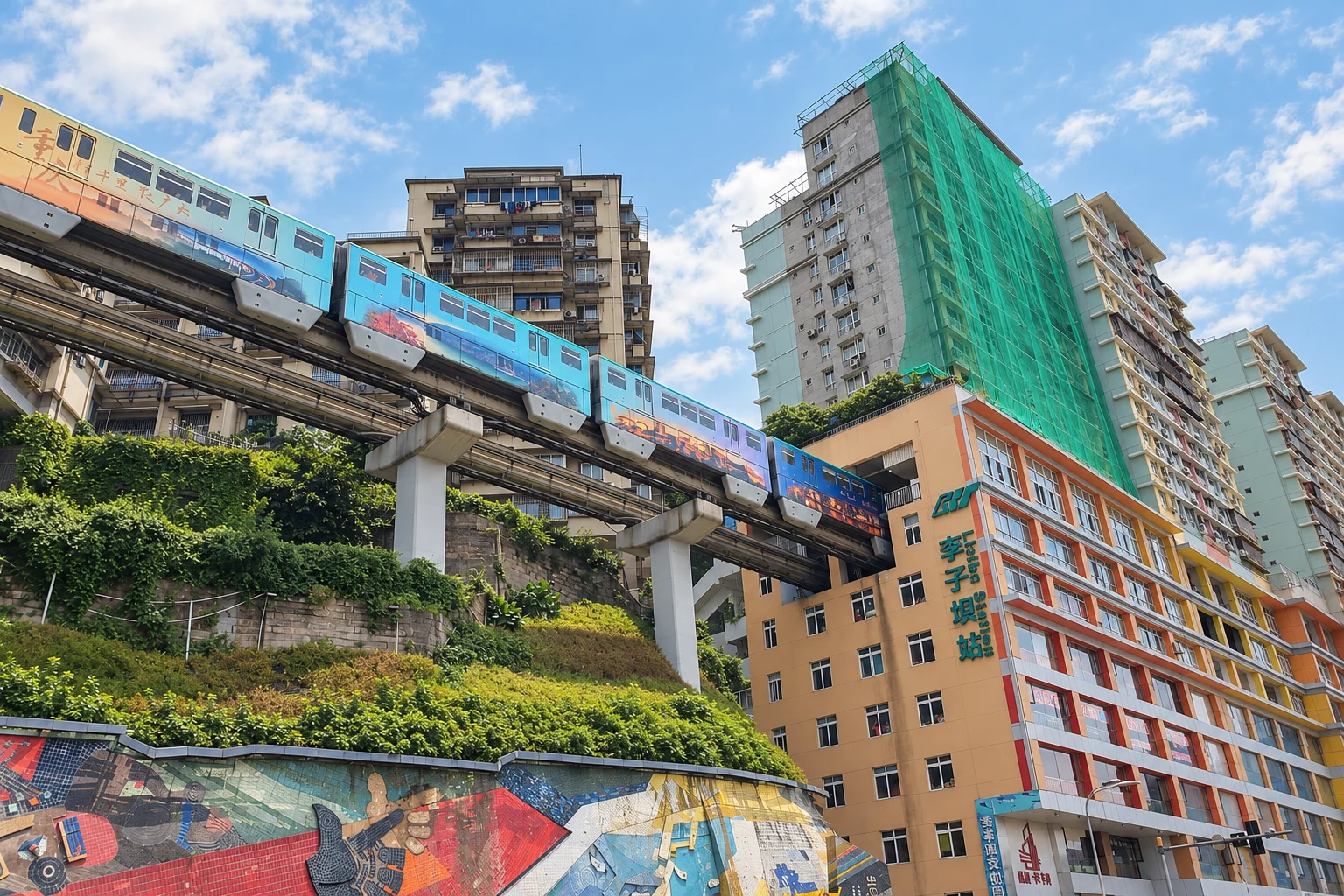
The point where the monorail runs straight through the middle of a residential block, with a viewing platform built to watch it.
- Best time
- Morning, Afternoon
- Allow
- 1 hr
ModerateConfirm practical details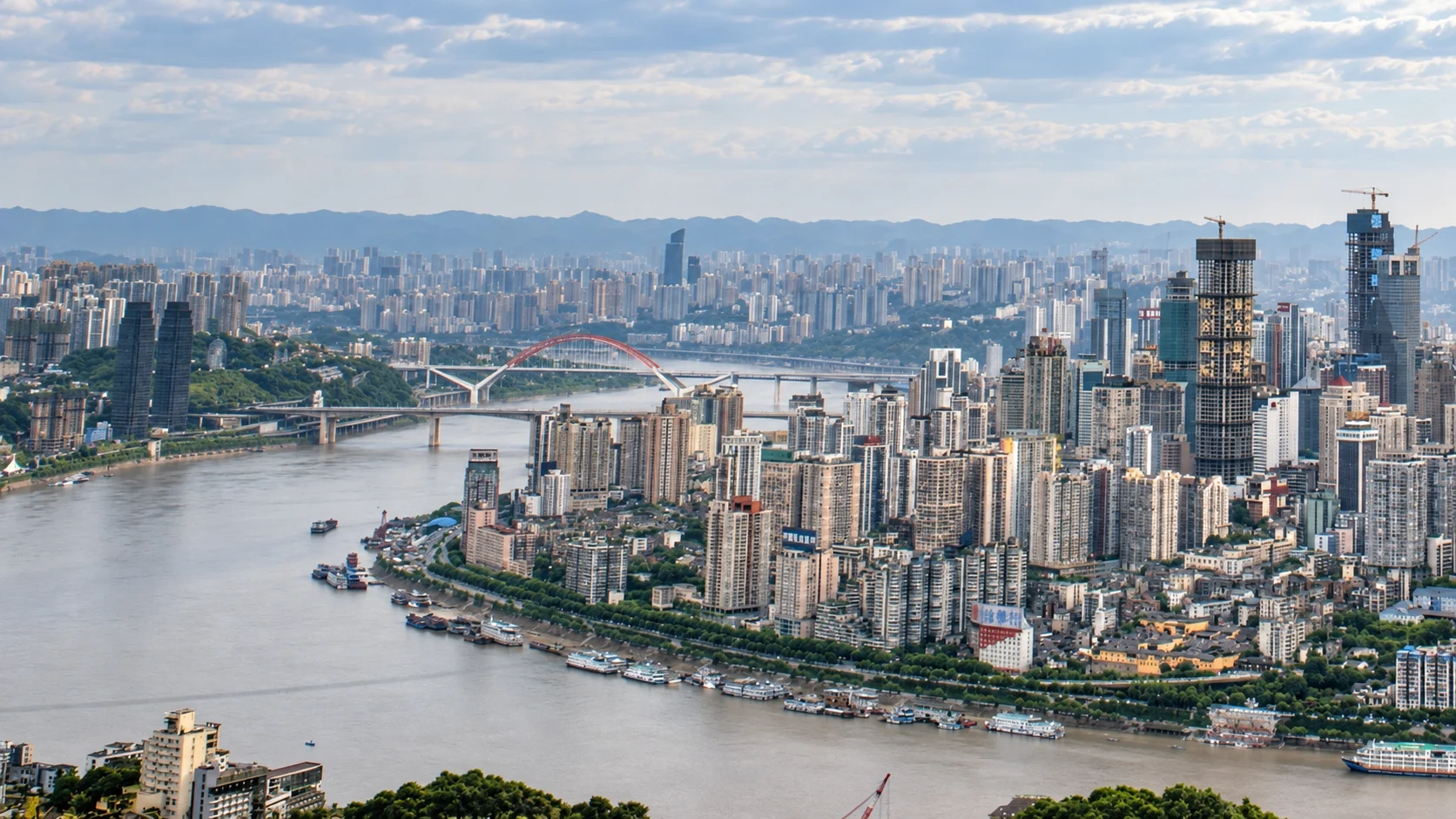
A purpose-built observation terrace high on Nanshan, looking north over the whole peninsula and the river confluence.
- Best time
- Sunset, Evening
- Allow
- 1 hr 30 min
EasyConfirm practical details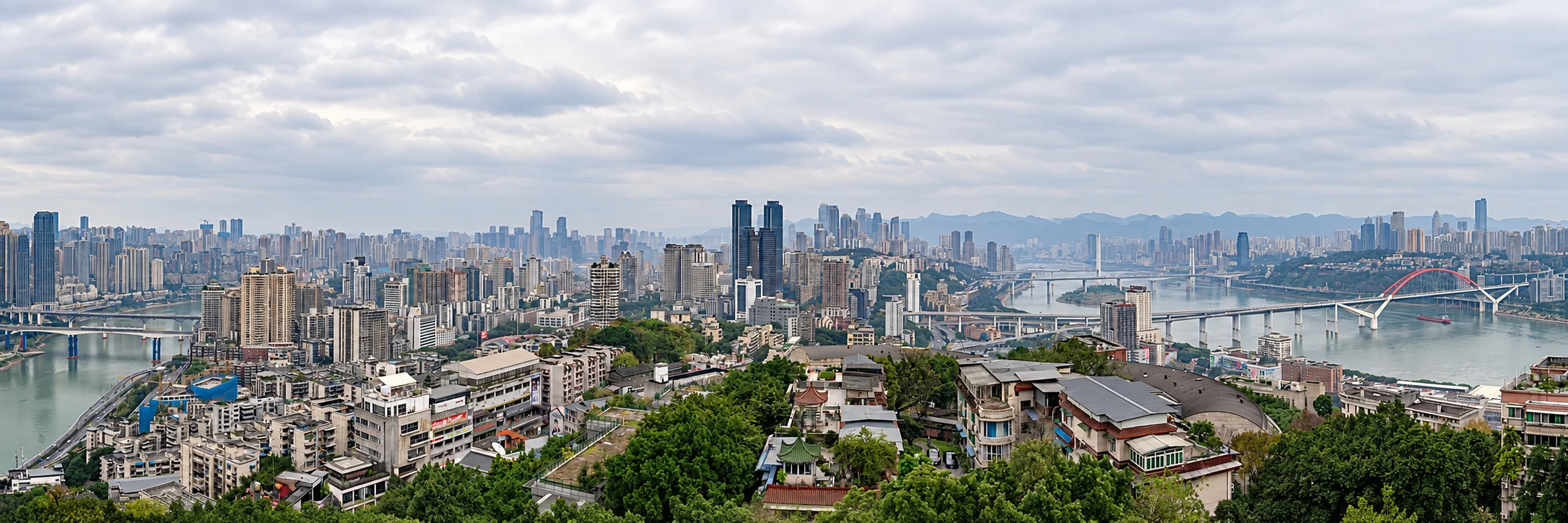
Eling Park · nearby skyline A printing factory converted into a small hillside district of studios, cafes and rooftop terraces, sitting just below Eling Park.
- Best time
- Afternoon, Sunset
- Allow
- 2 hr
ModerateConfirm practical details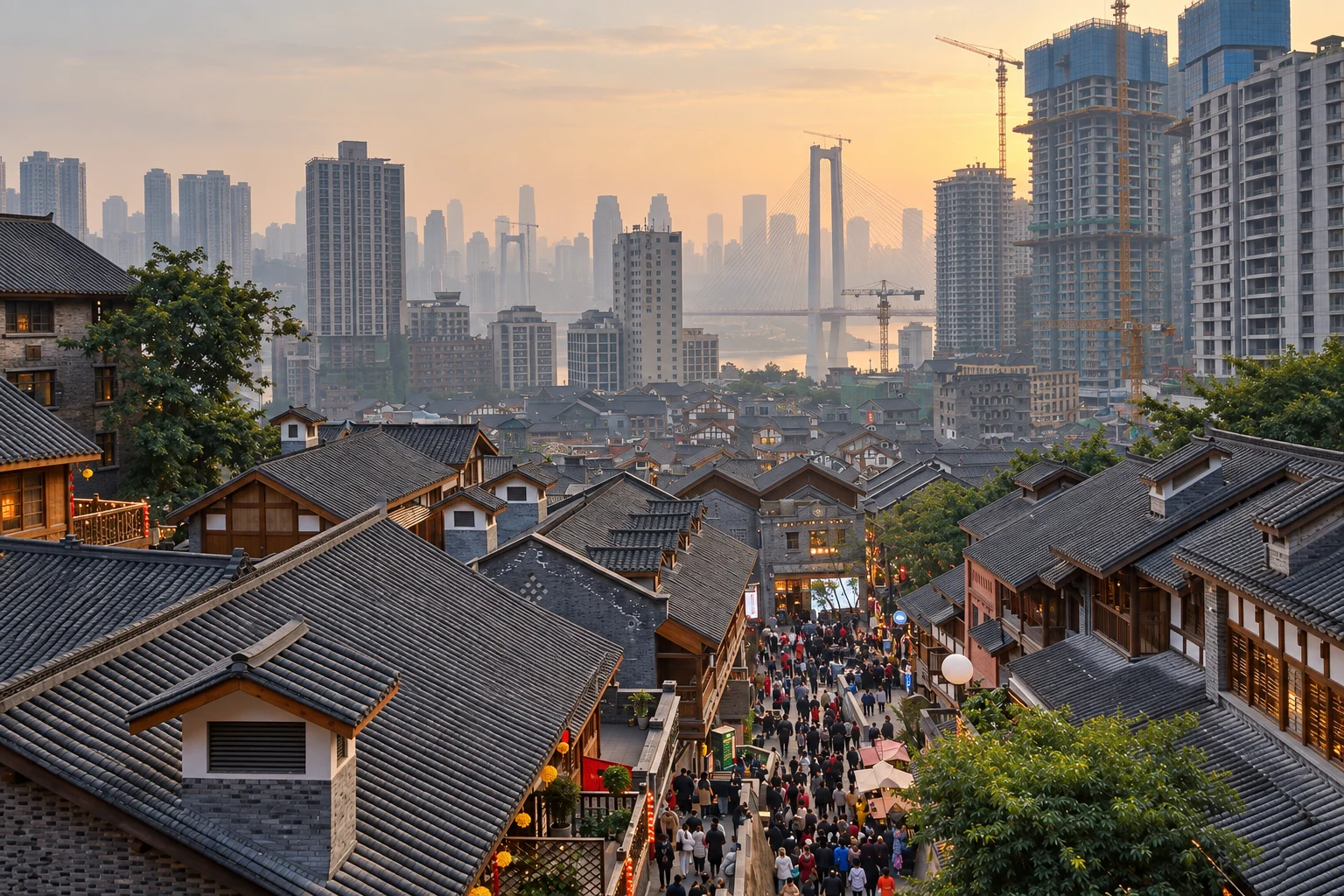
A restored hillside quarter of stepped lanes connecting the upper city to the lower town, rebuilt around the remains of an older neighbourhood.
- Best time
- Morning, Afternoon
- Allow
- 1 hr 30 min
HardMany stairsConfirm practical details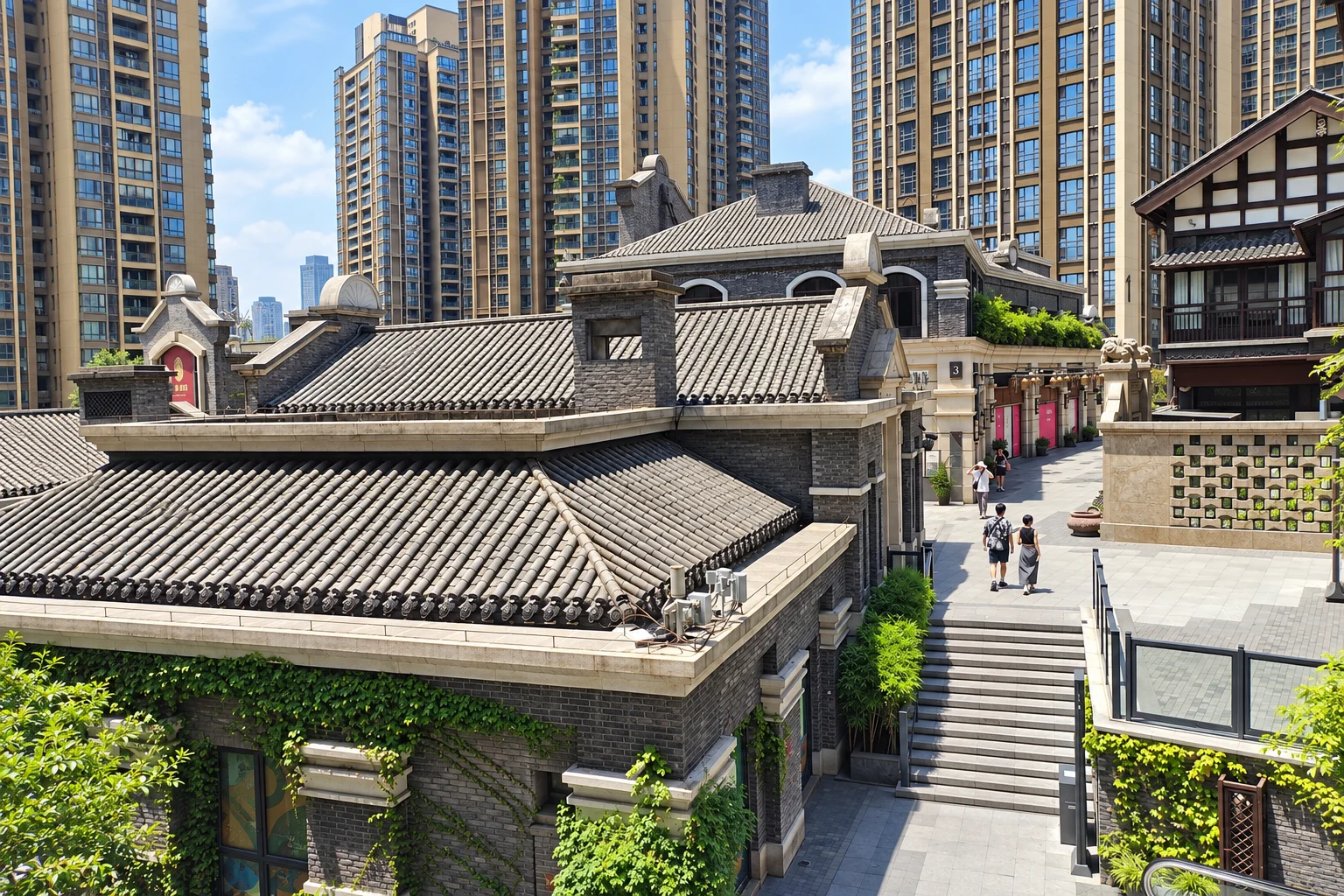
A rebuilt hillside street on the south bank where the two rivers converge, arranged as a stepped run of courtyards above the water.
- Best time
- Afternoon, Sunset
- Allow
- 2 hr
ModerateConfirm practical details
Practical notes
Tripods are workable at the outdoor viewpoints and awkward inside ticketed attractions. The bridge deck at Qiansimen is exposed to wind, which matters for long exposures.
Security at some attractions will ask you not to set up a tripod in a way that blocks a walkway. This is reasonable, and it is enforced.
Bring more battery than you think you need. A cold, damp day in a stair district drains a phone faster than a normal day of shooting.
Related guides
Explore
Chongqing at Night
The city's best hours. Where the light is worth the walk, in what order to see it, and how to get back to your hotel afterwards.
View guideConfirm practical detailsTravel Essentials
Chongqing Terrain and Walking
Plan Chongqing by street level and hotel entrance. Use walking labels to compare effort, then confirm the complete route if stairs or lifts determine access.
View guideConfirm practical detailsPlan
Best Time to Visit Chongqing
The city is a genuine year-round destination, but the seasons change what you can do rather than merely how comfortable you are. Here is how each one behaves.
View guideConfirm practical details
Places mentioned
- Qiansimen Bridge千厮门大桥
- Nanshan Yikeshu Viewpoint南山一棵树观景台
Before you go
Check current opening, booking and access arrangements with the venue before your visit.